Mobile RV Roof Repair and Sealing Across Florida
EPDM and TPO recoating, Dicor lap-sealant replacement, skylight and vent reseal, full roof replacement, and leak diagnosis with moisture meter.
Who: RV owners with leaks, soft spots, peeling rubber roof, cracked seals, or anyone due for a full recoat.
What: EPDM and TPO recoating, Dicor lap-sealant replacement, skylight and vent reseal, full roof replacement, and leak diagnosis with moisture meter.
Where: Across Florida. We come to your driveway, campground, or storage facility. Call (833) 465-8787.
Your rig's roof is the most important part of the whole RV and the part most owners ignore until something gets wet inside. I get it - it's hot up there, the rubber feels weird underfoot, and most folks have never been on top of their own rig. But Florida sun and Florida rain wear out roof materials twice as fast as the spec sheet says, and the cost difference between catching a problem early and rebuilding a soft roof is roughly the cost of a used car.
Most roof calls we run break down two ways: "I see a stain on my ceiling" (active leak, get there now) or "my roof looks chalky and I think it's time" (recoat, schedule when it works). Both are fixable. The first one needs to happen this week. The second one can wait a month.
Why Roof & Sealing Fails Faster in Florida
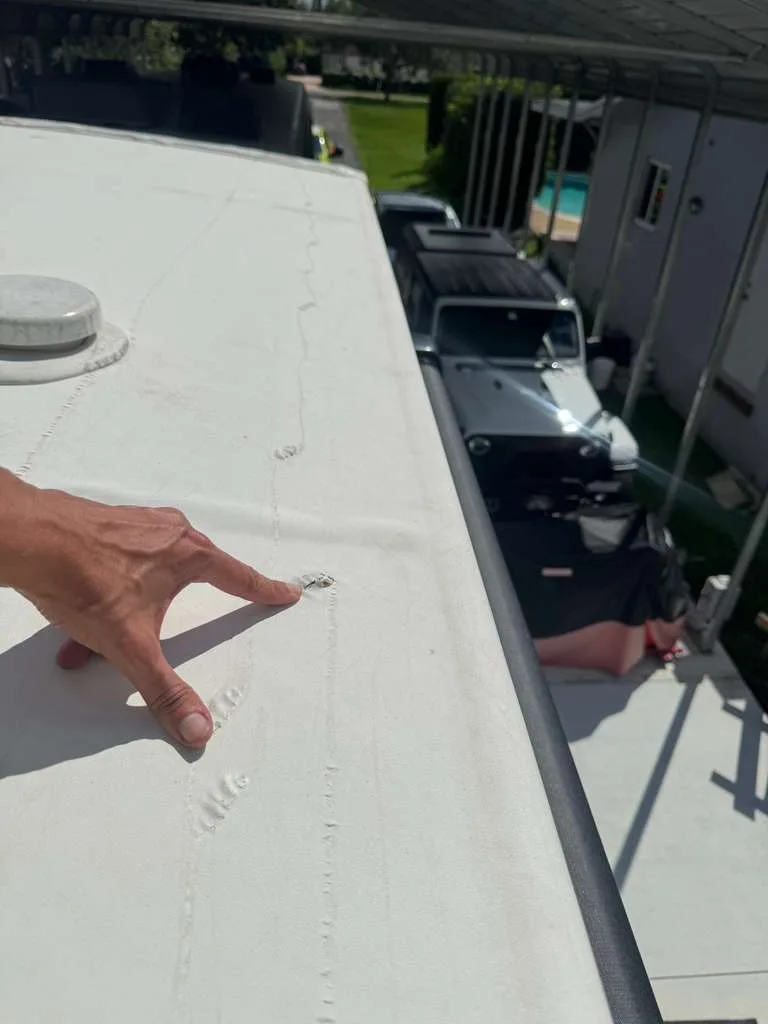
RV roofs fail at the seams, not in the middle. The Dicor lap sealant on your roof is doing 80% of the waterproofing work, and that sealant has a 5-year service life in Florida (the spec sheet says 10, but Florida UV and heat cycle it harder). When Dicor cracks, water gets under the rubber, the wood substrate rots, and now you're not patching a seam, you're rebuilding a roof.
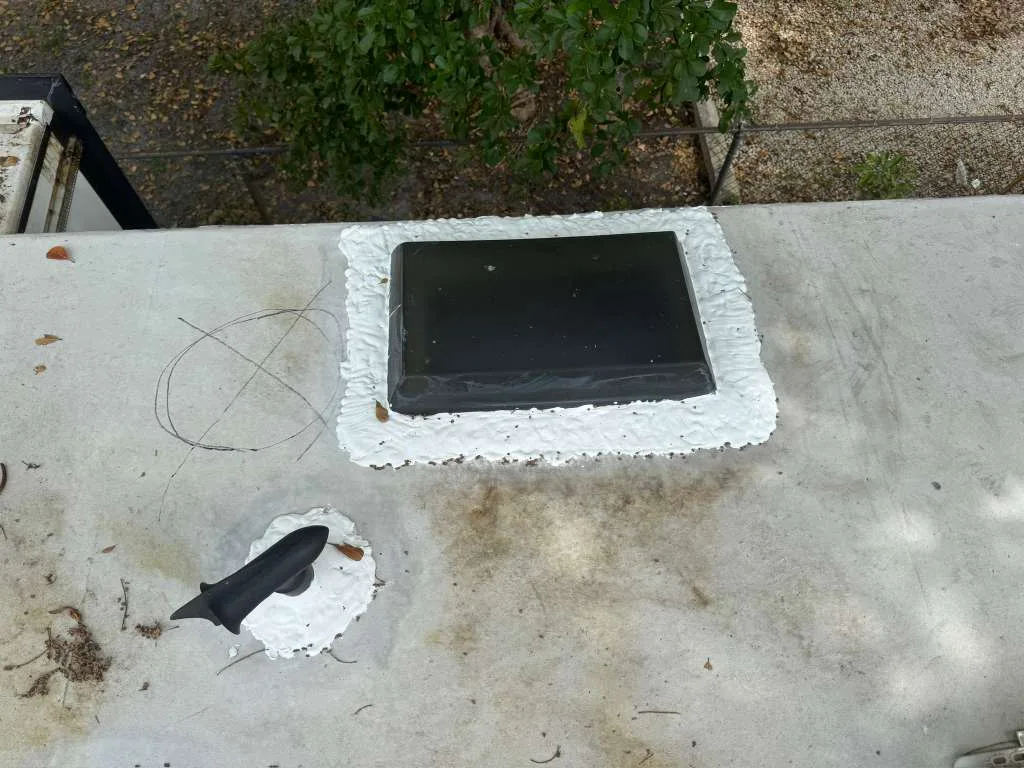
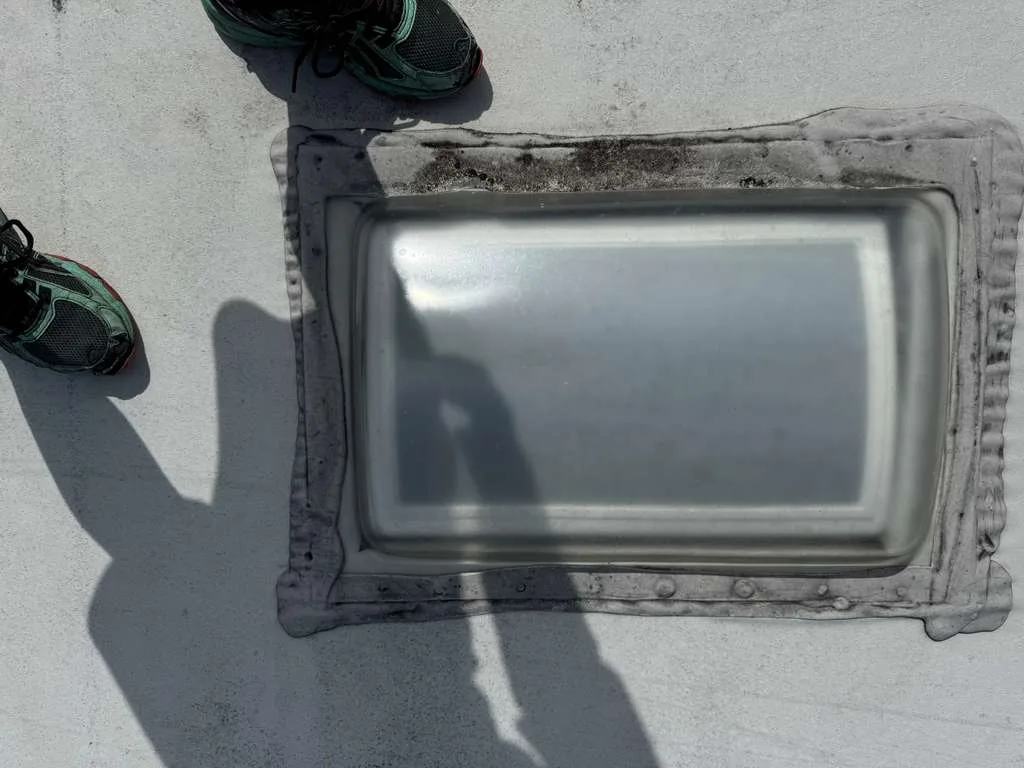
The other failure point is around penetrations: AC unit, vents, skylight, antenna, ladder mounts, and cap-corner trim. Every one of those has a seal that needs annual attention. We climb roofs all the time and find rigs that are 10 years old with original seals that should have been done at year 5. That's where the leaks come from.
What We Fix - Roof & Sealing
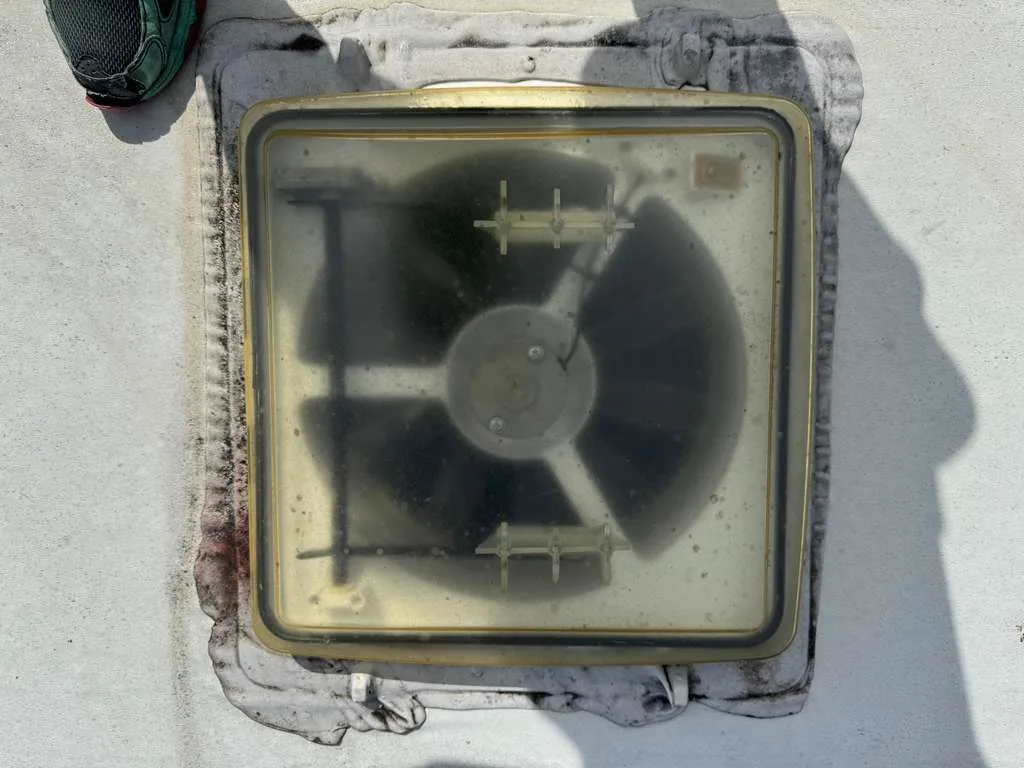
What Our Roof & Sealing Service Includes
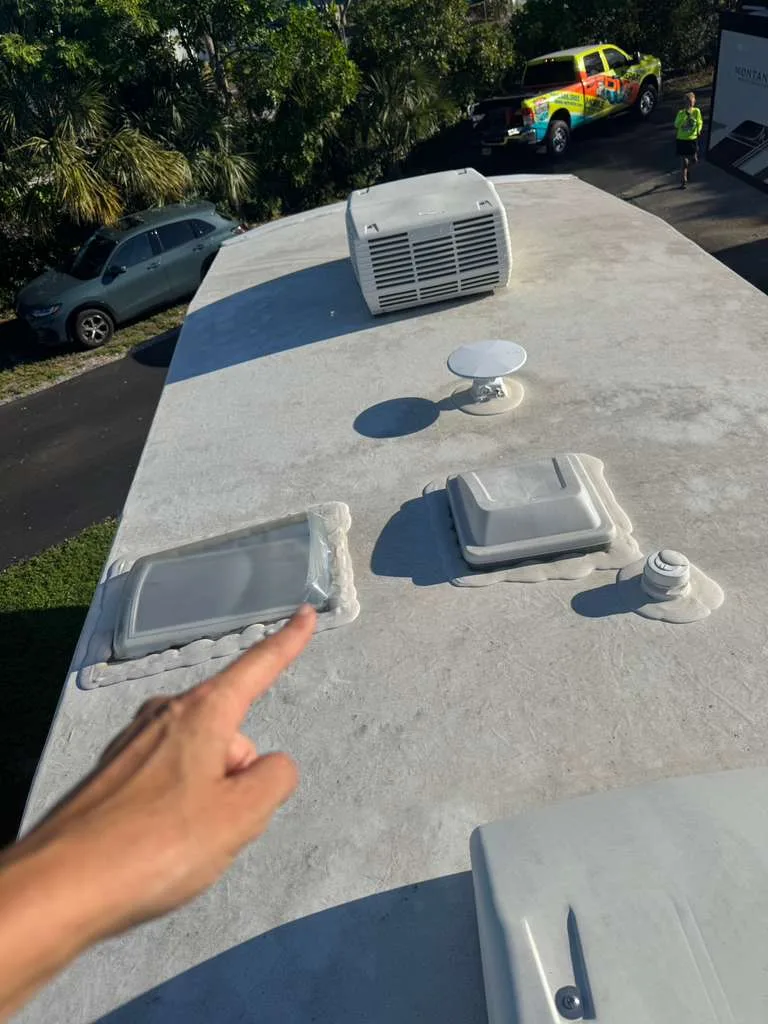
Roof service calls start with a walk-the-roof inspection. We check every seam, every penetration, the cap rails, and the substrate underfoot for soft spots. We use a moisture meter on suspect areas to find hidden water. That tells us what's leaking now and what's about to leak.
From there it's either a seal repair (one or two penetrations, $245-$485), a full perimeter reseal ($585-$985), or a roof recoat ($1,850-$3,250 depending on length and condition). Full roof replacements are scheduled separately - those are 2-3 day jobs.
Walk-the-roof inspection
We climb the roof and check every seam, every penetration, every cap. No drone shots, no "looks fine from the ground" guesses.
Moisture meter testing
Pro-grade Tramex moisture meter on suspect areas. We find hidden water before it becomes wood rot.
On-site recoating
Dicor self-leveling lap sealant, EternaBond reinforcement, and full RV Roof Magic / Liquid Roof recoats. All at your campsite or driveway.
Substrate repair
If the wood underneath is soft, we do the carpentry too. Most other mobile shops won't touch wood repair - we do.
Common Roof & Sealing Repairs and Pricing
Here's what most calls actually run. We give you a phone-quote range before scheduling, and an exact written quote at your site before any work starts.
Typical Pricing - $185-$5,200
- Dicor lap-sealant replacement (per penetration): $185-$285
- Full perimeter reseal: $585-$985
- Skylight reseal or replacement: $345-$685
- Roof vent replacement (Maxxair / Fan-Tastic): $385-$685
- EternaBond reinforcement (full roof seams): $785-$1,450
- Roof recoat (Liquid Roof / RV Roof Magic): $1,850-$3,250
- Soft-spot wood repair (per panel): $585-$1,250
- Full roof replacement (TPO/EPDM): $4,250-$5,200+ (size dependent)
Florida-Specific Roof & Sealing Considerations
Florida is the worst climate in the country for RV roofs. UV breaks down EPDM and TPO faster than the manufacturers like to admit, and our afternoon thunderstorms add water-pressure cycling on top of that. A roof that would last 12 years in Oregon lasts 7-8 in Florida. Plan for a recoat at year 5, a full assessment at year 10, and replacement somewhere between year 12-15.
Coastal storage is even harder. Salt spray pits the metal cap rails and corrodes the screw heads, which then fail and let water in along the cap edge. If you store within 5 miles of either coast, plan on inspecting your cap rails and seal every 6 months instead of every 12.
Emergency Roof & Sealing Service Across Florida
Active leak inside the rig is an emergency. Get a tarp on the roof if you can do it safely (not in a thunderstorm), put pots under any drips, and call (833) 465-8787. We'll prioritize the call - usually next-day, sometimes same-day if a tech is in your county.
If the leak is around a skylight or vent, the temporary fix is a self-amalgamating tape (we like Rescue Tape) wrapped around the base of the fixture from the inside. That'll usually buy you 48-72 hours until we can get there. Don't use silicone caulk - it's not compatible with Dicor and you'll create a bigger problem.
Roof & Sealing Specialties We Handle
Common subspecialties under roof & sealing - all done at your location, all in one visit when possible.
Lap-Sealant Replacement
Dicor self-leveling lap sealant on every penetration and cap edge. Annual maintenance for most rigs.
Roof Recoating
Liquid Roof, RV Roof Magic, and Heng's Industries recoats. 5-year warranties on most products.
Skylight & Vent Service
Skylight replacement, Maxxair vent installs, Fan-Tastic vent replacements, plus full reseal of any roof penetration.
Soft-Spot Repair
Wood substrate repair for delamination and water damage. Often paired with full reseal or recoat.
Cap Rail & Trim
Aluminum cap-rail replacement on rigs with corrosion or damage. Often a hidden cause of perimeter leaks.
Full Roof Replacement
EPDM and TPO full-roof replacements. 2-3 day jobs at your storage facility.
Roof & Sealing - Common Questions
Straight answers from our roof & sealing call log.
How do I know if my roof needs to be recoated?
Look for chalking on the rubber surface, cracks in the Dicor seams, or any soft spot underfoot. If you're past 5 years from your last recoat or last inspection, it's worth $185 for us to climb up and tell you. - Marc
Can I walk on my RV roof?
Most fiberglass and TPO roofs can hold a person, but only on the framed structural areas - not the middle of a panel between trusses. If you don't know your rig's structure, send us a photo of the roof from a ladder and we'll tell you where to step.
Should I use silicone or Dicor?
Dicor on a flat rubber roof, every time. Silicone doesn't bond well to EPDM, and it makes future repairs harder because nothing else sticks to old silicone. We see a lot of silicone-mistake repairs that need to be redone. - Marc
What's EternaBond and do I need it?
EternaBond is a butyl tape that bonds permanently to your roof - we use it to reinforce seams that have been a chronic leak point. Not necessary on a healthy roof, but a great fix when you've got a recurring leak somewhere specific.
My ceiling has a yellow stain - is the roof leaking now?
Yellow stains usually mean past water damage from a leak that's been fixed (or stopped naturally). White or fresh stains mean active leak. We can tell the difference with a moisture meter - $185 service call.
How often should I reseal the roof?
In Florida, we recommend Dicor lap-sealant maintenance every 12 months and a full roof inspection every 24. Storage location matters a lot - coastal storage cuts those intervals in half.
Is a rubber roof or a fiberglass roof better?
Different tradeoffs. Rubber (EPDM/TPO) is cheaper to maintain but needs recoating every 5-7 years. Fiberglass lasts longer with no recoats but is more expensive to repair when damaged. Both work fine in Florida if you maintain them.
Can you replace just one roof panel?
Yes - if the rest of the roof is sound, we cut and patch with matching material. Plan on $585-$1,250 per panel depending on size.
What's the difference between Liquid Roof and Liquid Rubber?
Liquid Roof is EPDM-based - matches existing rubber roofs and stays flexible. Liquid Rubber is acrylic - cheaper but stiffens over time and we don't recommend it for Florida heat. We use Liquid Roof on most recoats. - Marc
How much for a full roof inspection?
$185 for a complete walk-the-roof, moisture meter test, and written report. Best $185 you'll spend on a rig over 7 years old.
Where We Provide Roof & Sealing in Florida
Bolt RV Repair runs roof & sealing jobs across these Florida cities. Click your closest one for local-specific info, response times, and campground coverage.